Donna Nantege

Pace Uganda 2024 Annual Report Summary

As we reflect on how we, as an organization, can do more, we cannot forget our past achievements.  We navigated both challenges and opportunities in a rapidly changing global landscape but still managed to achieve significant milestones across key sectors, including HIV/AIDS, Reproductive Health, Maternal and Child Health, Immunization, Malaria, WASH, and Non-communicable Diseases (NCDS), reaching 94 districts in 2024 alone.  “The Programme for Accessible Health Communication and Education (PACE)remains distinguished by its people-centered approach, grounded in Obuntubulamu values, honesty, empathy, responsibility, integrity, and humility,” said our Patron, The Queen of Buganda, Sylvia Nagginda Luswata.  The PACE team remained steadfast in upholding our core values: Recognition and Reward, Innovation and Creativity, Open Communication and Teamwork, Speed and Efficiency, Transparency and Accountability.  In 2024, PACE reached 1,888,700 individuals with health services and implemented eight projects. We completed four impactful initiatives, such as the Differentiated Condom Demand Generation and Last-Mile Distribution Initiative, Social and Behavioral Change Campaign for IG2 nets, Long Lasting Net durability monitoring, and addressing ICCM commodity stockouts in Uganda.   As a result of this:  We are grateful for the support of donors and partners that have supported us over the years: PMI/USAID, BASF, The Global Fund/MOH, PATH, AMF, VisionSpring, and others, and extend special thanks to the Ministry of Health, local governments, and community resource persons for their invaluable contributions to our work. Together, we have made a meaningful impact on the health and well-being of the communities we serve.  Despite global and national funding constraints for health, PACE has adapted its strategies to sustain service delivery. As Leaders in Solutions for the Health Market, we look forward to championing change and creating solutions that influence positive changes in our community and intend to expand into climate change, positioning PACE as a key partner in building climate-resilient health systems in line with our emerging donor priorities.  The Health projects PACE Uganda worked on can be found here:

THE MAKING OF A LEADER: The Story Of Apiyo Docus.

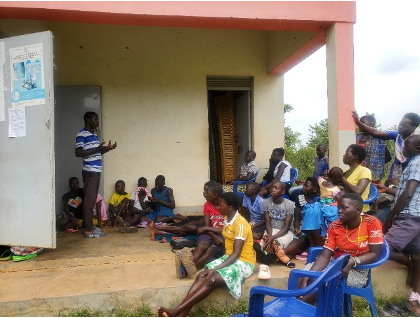
Nestled in the heart of Lukodi village, found in Bungatira subcounty, Gulu District, lives Apiyo Docus.  Apiyo Docus is a 17-year-old girl, the last born of 7 siblings, and a Primary Seven dropout. She grew up in a household led by her single mother, who struggled to provide for her and her siblings. Due to financial challenges, Apiyo was forced to drop out of school after her primary seven.  Apiyo is just like many other girls in Gulu district who drop out of school and are left vulnerable and exposed to negative peer influence.  According to a baseline survey conducted in Omoro and Gulu districts to assess the lived realities of adolescent girls aged 10-19, with a focus on the drivers and consequences of teenage pregnancy and access to SRHR information and services, education outcomes in Gulu District were particularly concerning. In Bungatira, Omel, and Patiko, the survey reported a 0% completion rate, with very low in-school attendance (5.7% – 12.2%) and dropout rates ranging from 16.7% to 18.5%. The findings further revealed that 77% of girls who had dropped out of school had experienced pregnancy.  The data tells a sobering truth: Apiyo could have easily been part of that 77%. She became known in her community for keeping bad company, which put her future at risk.  But Apiyo met her Guardian angel, a Nursing officer and mentor of a peer group from Bungatira Subcounty, who identified her during the formation of peer-to-peer groups and decided to mentor her. The formation of these groups was supported by PACE with funding from the European Union. PACE and HANDLE realized that there is a need to equip young leaders with the tools, mentorship, and platforms they need to drive change within their communities through the formation of youth clubs like the peer-to-peer groups.  Apiyo went on to attend a five-day training on the peer-to-peer approach, followed by further training on referral and reporting of Sexual Reproductive Health Rights and Services and Sexual Gender Based Violence. These trainings equipped her with knowledge on SRHR , leadership skills, and most importantly, confidence.  Apiyo was selected by her peers to serve as their leader. With her skills, she began mobilizing her peers every Saturday at a safe space in Lukodi, where she led discussions on the dangers of early pregnancy and Adolescent growth and development with her mentor stepping in to provide some support on technical aspects and more challenging issues  To strengthen the group’s impact and sustainability, she formed a team of five adolescents who served as committee members and supported her in managing the group activities. Using drama and interactive methods, Apiyo has made learning fun and relatable, inspiring many adolescents to adopt healthier behaviors.  This group of young adolescents now dreams of performing dramas on the prevention of teenage pregnancies in schools and at national events to reach out to more adolescents in the districts.   “Docus has completely changed the way she carries herself, showing responsibility and focus. Community members and religious leaders have also recognized her growth, with her church entrusting her to teach Sunday school classes,” says her mother.  Today, Apiyo is not only a peer leader but also a role model among her peers. She heads the Rubanga Twero peer group of 25 adolescent girls.   She is deeply grateful to PACE and the European Union for the opportunity that gave her a second chance to redefine her path. Her journey demonstrates how investing in adolescents can turn vulnerability into leadership and give them hope for their future.  Story compiled by Joy Eleng-Project Officer, Gulu  Edited by Angel Nantege Donna-Communications Volunteer. 

Celebrating World Sight Day 2025.

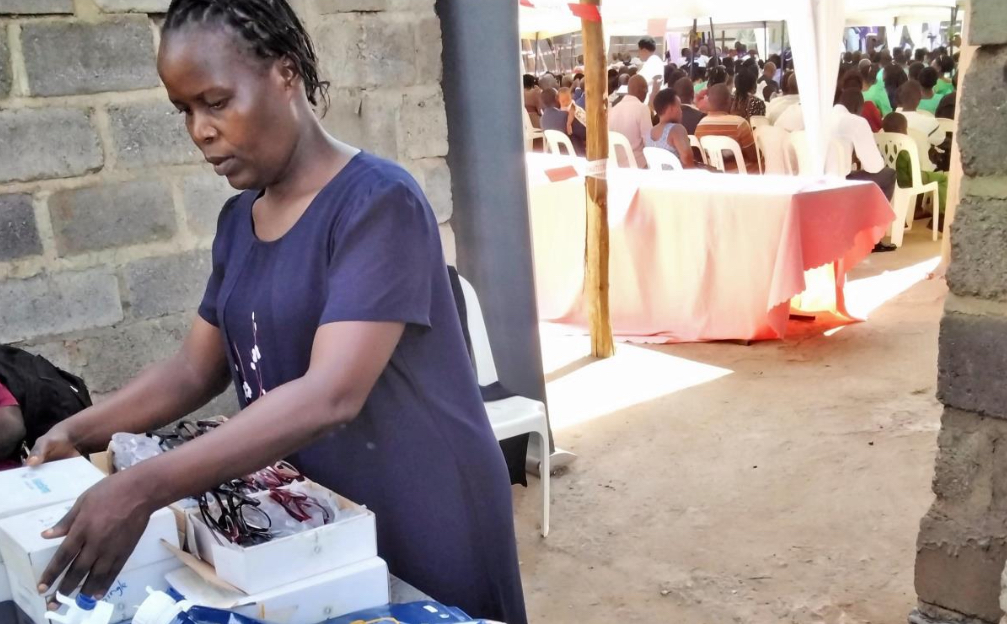
CELEBRATING WORLD SIGHT DAY: Putting People at the Heart of Eye Health. On the second Thursday of every October, the world comes together to reflect on the importance of accessible, available, and affordable eye care for all. World Sight Day, observed annually, raises global awareness about the impact of blindness and vision impairment. The theme for the 2025 World Sight Day is “#LoveYourEyes – Putting People at the Heart of Eye Health“. This global campaign, led by the International Agency for the Prevention of Blindness (IAPB), encourages the public to prioritize their eye health by getting their sight checked regularly and promotes community involvement in sharing personal eye health stories to raise awareness and promote accessible eye care for all. PACE Uganda, in the spirit of #LoveYourEyes and in partnership with VisionSpring, shares a long-term goal of establishing sustainable, market-based access to affordable reading glasses for adults above 35 years in low-income communities across Uganda through The Reading Glasses for Improved Livelihoods (RGIL) program. The Reading Glasses for Improved Livelihoods (RGIL) program is designed to enhance functionality, productivity, and income-generating potential among adults living with near vision loss from presbyopia. Expanding Access to Affordable Vision Care:In the year 2024/2025, PACE, in partnership with VisionSpring, continued its efforts to make quality vision care accessible and affordable for communities. Through 129 eye camps held in markets, churches, and other community settings, the team screened 3,606 individuals, sold 1,408 pairs of reading glasses at subsidized prices, and referred 1,508 clients to higher-level health facilities for specialized care.To strengthen service delivery, PACE staff were trained to enhance their capacity in screening for presbyopia. The initiative was implemented across the districts of Kampala, Wakiso, Mukono, Kayunga, Kiboga, Luwero, Nakaseke, and Nakasongola. Join the Movement!

THE BREAKING THE CYCLE PROJECT.

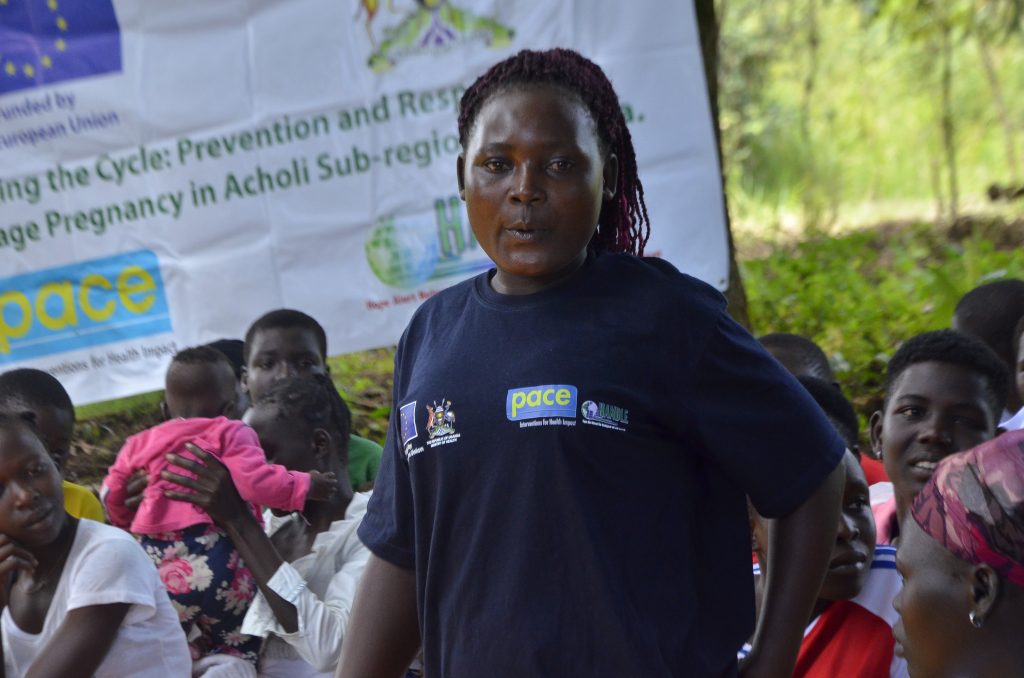
Teenage pregnancy remains a critical public health and development concern in Uganda, particularly in the Northern Region. Despite various national efforts, significant policy and system-level barriers persist in existing sexuality education programs in Uganda’s schools and health systems.Furthermore, gender norms, stigma, and limited paternal engagement continue to restrict open discussions between adolescents and other stakeholders on issues related to sexuality, reproductive health, and relationships. Breaking the Cycle was designed in response to these challenges. Breaking the Cycle: Prevention and Response to Teenage Pregnancy in Acholi Sub-region is a bold, multi-dimensional intervention designed to address teenage pregnancy and associated vulnerabilities in Northern Uganda. Led by PACE, in partnership with HANDLE Uganda, this transformative three-year initiative will be implemented in Gulu and Omoro districts, which report some of the highest rates of teenage pregnancy, poverty, and gender-based violence in the country.PACE and its partners aim not only to reduce teenage pregnancy but to catalyze a paradigm shift, one where adolescent girls are protected, educated, and empowered to pursue their full potential in an enabling and inclusive environment. The project focuses on two main objectives:1. Increasing access to essential Sexual and Reproductive Health and Rights (SRHR) services for teenage girls, boys, and young mothers by enhancing community awareness and bolstering support structures. 2. Supporting the successful reintegration of adolescent girls into both mainstream education and alternative education pathways through tailored academic support, mentorship, and vocational training, alongside livelihood initiatives such as backyard gardening, entrepreneurship, and the formation of Village Savings and Loan Associations (VSLAs), empowering girls and young mothers to access essential resources and build sustainable incomes. The project targets to reach over 330,000 vulnerable adolescent girls, women, youth and persons with disabilities, support 20,0000 individuals including women, adolescents (13-19) affected by child abuse, early marriage, poverty, exclusion, illness, GBV and teenage pregnancy and 2000 community structures including leaders, care givers, teachers, health workers, legal and psychosocial volunteers, police, grassroots CSOS, and SRHR service providers. These partnerships will help create safe, inclusive, and supportive environments where adolescents can thrive and will be essential for achieving the goals of the Breaking the Cycle project.