Uncategorized

PACE Uganda, with funding from the European Union, launches the “Breaking the Cycle” Project in Omel Sub-county, Gulu district. 

A photo moment with the Resident District Commissioner, District t and the PACE Uganda team following the official launch of the EU-funded Breaking the Cycle Project during the 16 Days of Activism to End GBV in Omel Subcounty, Gulu District.  On 25th November 2025, during the Gulu District commemoration of the 16 Days of Activism to End Gender-Based Violence, the Resident District Commissioner officially launched the EU-funded Breaking the Cycle: Prevention and Response to Teenage Pregnancy project, implemented by PACE Uganda, in Omel Subcounty.  Launching the project directly in the community demonstrated strong local ownership and ensured that those most affected are centred in designing and driving solutions.  The project’s core objective is to provide comprehensive Sexual and Reproductive Health (SRH) services to adolescent girls and support their reintegration into both formal and informal education pathways. By ensuring that girls access accurate  information, youth-friendly services, and learning opportunities, the project aims to reduce vulnerability and prevent early pregnancy.  At the launch, youth group Ripe Be presented a drama on the theme “End Digital Violence Against All Women and Girls,” demonstrating the power of youth voices in community awareness.  Figure: Ripe Be peer group under EU project performs a drama on “End Digital Violence Against All Women and Girls” at Omel Pageya Primary School  The project also integrates male engagement activities to encourage supportive behaviours and improve community attitudes toward girls’ health, education, and safety.  With European Union support, PACE Uganda continues to strengthen community-led solutions to ensure that adolescent girls in the Acholi Sub-region are healthier, safer, and able to return to school. 
RIBBE AYE TEKO: Unity Is Strength.

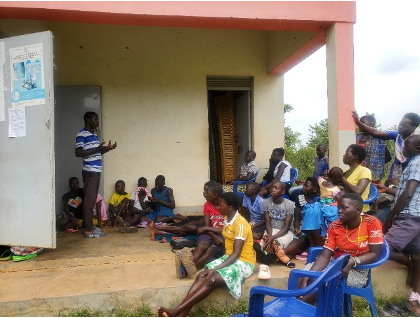
Have you ever wondered how empowerment, mentorship, and male engagement can transform a young person’s life? Meet Alunga Gaius. Alunga Gaius is a 19-year-old from Parak Parish in Akidi Sub-County, Omoro District. Coming from a large family of twelve, Gaius was the sixth of ten children. His education was cut short when he dropped out after Primary Seven due to financial hardship, preventing him from continuing to secondary school. When a Health Assistant mobilized adolescents to form peer groups under the EU-Funded project: Breaking the Cycle, Gaius joined because he saw an opportunity to learn and grow. His commitment and enthusiasm led to his election as the leader of the boys’ group, Rine en Teko. He later participated in a five-day training organized by PACE Uganda with funding from the European Union, where he gained knowledge about Sexual and Reproductive health, life skills, teenage pregnancy prevention, and the challenges adolescents face. Initially shy and unsure of himself, Gaius gradually gained confidence and began actively engaging with other peer leaders within the sub-counties. The baseline survey conducted by PACE under the Breaking The Cycle project in May 2025 revealed multiple challenges in addressing teenage pregnancy in Omoro District. Stakeholders highlighted deep-rooted structural and social barriers ranging from poor service reach to harmful community attitudes that continue to undermine early prevention and reintegration efforts for adolescent girls. One key challenge identified was low male engagement: most programs focus on girls, leaving boys uninformed or disengaged from prevention strategies. Alunga Gaius exemplifies how these gaps in adolescent health programs can be addressed. “Through this training, I have become more knowledgeable about adolescent health and how to guide my peers,” Gaius shares. “People in my community now see me as a teacher for young people. I work closely with the Village Health Teams and always encourage adolescents to make informed decisions.” Today, Gaius is a respected youth leader who educates boys and girls alike on the dangers of teenage pregnancy and HIV/AIDS. In Acholi, they say Ribbe Aye Teko, which, when translated, means “Unity is Strength.” This perfectly captures the spirit of what male engagement can do in addressing the high levels of Teenage Pregnancy in the Acholi sub-region. Alone, one voice may struggle to create any change, but together, their collective strength becomes power. Power to challenge norms, support one another, and build communities where every boy can lead with purpose. Signatories: Compiled By: Muhindo Maureen, SRHO Edited by: Angel Nantege Donna, Communications.

Pace Uganda 2024 Annual Report Summary

As we reflect on how we, as an organization, can do more, we cannot forget our past achievements.  We navigated both challenges and opportunities in a rapidly changing global landscape but still managed to achieve significant milestones across key sectors, including HIV/AIDS, Reproductive Health, Maternal and Child Health, Immunization, Malaria, WASH, and Non-communicable Diseases (NCDS), reaching 94 districts in 2024 alone.  “The Programme for Accessible Health Communication and Education (PACE)remains distinguished by its people-centered approach, grounded in Obuntubulamu values, honesty, empathy, responsibility, integrity, and humility,” said our Patron, The Queen of Buganda, Sylvia Nagginda Luswata.  The PACE team remained steadfast in upholding our core values: Recognition and Reward, Innovation and Creativity, Open Communication and Teamwork, Speed and Efficiency, Transparency and Accountability.  In 2024, PACE reached 1,888,700 individuals with health services and implemented eight projects. We completed four impactful initiatives, such as the Differentiated Condom Demand Generation and Last-Mile Distribution Initiative, Social and Behavioral Change Campaign for IG2 nets, Long Lasting Net durability monitoring, and addressing ICCM commodity stockouts in Uganda.   As a result of this:  We are grateful for the support of donors and partners that have supported us over the years: PMI/USAID, BASF, The Global Fund/MOH, PATH, AMF, VisionSpring, and others, and extend special thanks to the Ministry of Health, local governments, and community resource persons for their invaluable contributions to our work. Together, we have made a meaningful impact on the health and well-being of the communities we serve.  Despite global and national funding constraints for health, PACE has adapted its strategies to sustain service delivery. As Leaders in Solutions for the Health Market, we look forward to championing change and creating solutions that influence positive changes in our community and intend to expand into climate change, positioning PACE as a key partner in building climate-resilient health systems in line with our emerging donor priorities.  The Health projects PACE Uganda worked on can be found here:

THE MAKING OF A LEADER: The Story Of Apiyo Docus.

Nestled in the heart of Lukodi village, found in Bungatira subcounty, Gulu District, lives Apiyo Docus.  Apiyo Docus is a 17-year-old girl, the last born of 7 siblings, and a Primary Seven dropout. She grew up in a household led by her single mother, who struggled to provide for her and her siblings. Due to financial challenges, Apiyo was forced to drop out of school after her primary seven.  Apiyo is just like many other girls in Gulu district who drop out of school and are left vulnerable and exposed to negative peer influence.  According to a baseline survey conducted in Omoro and Gulu districts to assess the lived realities of adolescent girls aged 10-19, with a focus on the drivers and consequences of teenage pregnancy and access to SRHR information and services, education outcomes in Gulu District were particularly concerning. In Bungatira, Omel, and Patiko, the survey reported a 0% completion rate, with very low in-school attendance (5.7% – 12.2%) and dropout rates ranging from 16.7% to 18.5%. The findings further revealed that 77% of girls who had dropped out of school had experienced pregnancy.  The data tells a sobering truth: Apiyo could have easily been part of that 77%. She became known in her community for keeping bad company, which put her future at risk.  But Apiyo met her Guardian angel, a Nursing officer and mentor of a peer group from Bungatira Subcounty, who identified her during the formation of peer-to-peer groups and decided to mentor her. The formation of these groups was supported by PACE with funding from the European Union. PACE and HANDLE realized that there is a need to equip young leaders with the tools, mentorship, and platforms they need to drive change within their communities through the formation of youth clubs like the peer-to-peer groups.  Apiyo went on to attend a five-day training on the peer-to-peer approach, followed by further training on referral and reporting of Sexual Reproductive Health Rights and Services and Sexual Gender Based Violence. These trainings equipped her with knowledge on SRHR , leadership skills, and most importantly, confidence.  Apiyo was selected by her peers to serve as their leader. With her skills, she began mobilizing her peers every Saturday at a safe space in Lukodi, where she led discussions on the dangers of early pregnancy and Adolescent growth and development with her mentor stepping in to provide some support on technical aspects and more challenging issues  To strengthen the group’s impact and sustainability, she formed a team of five adolescents who served as committee members and supported her in managing the group activities. Using drama and interactive methods, Apiyo has made learning fun and relatable, inspiring many adolescents to adopt healthier behaviors.  This group of young adolescents now dreams of performing dramas on the prevention of teenage pregnancies in schools and at national events to reach out to more adolescents in the districts.   “Docus has completely changed the way she carries herself, showing responsibility and focus. Community members and religious leaders have also recognized her growth, with her church entrusting her to teach Sunday school classes,” says her mother.  Today, Apiyo is not only a peer leader but also a role model among her peers. She heads the Rubanga Twero peer group of 25 adolescent girls.   She is deeply grateful to PACE and the European Union for the opportunity that gave her a second chance to redefine her path. Her journey demonstrates how investing in adolescents can turn vulnerability into leadership and give them hope for their future.  Story compiled by Joy Eleng-Project Officer, Gulu  Edited by Angel Nantege Donna-Communications Volunteer. 

THE BREAKING THE CYCLE PROJECT.

Teenage pregnancy remains a critical public health and development concern in Uganda, particularly in the Northern Region. Despite various national efforts, significant policy and system-level barriers persist in existing sexuality education programs in Uganda’s schools and health systems.Furthermore, gender norms, stigma, and limited paternal engagement continue to restrict open discussions between adolescents and other stakeholders on issues related to sexuality, reproductive health, and relationships. Breaking the Cycle was designed in response to these challenges. Breaking the Cycle: Prevention and Response to Teenage Pregnancy in Acholi Sub-region is a bold, multi-dimensional intervention designed to address teenage pregnancy and associated vulnerabilities in Northern Uganda. Led by PACE, in partnership with HANDLE Uganda, this transformative three-year initiative will be implemented in Gulu and Omoro districts, which report some of the highest rates of teenage pregnancy, poverty, and gender-based violence in the country.PACE and its partners aim not only to reduce teenage pregnancy but to catalyze a paradigm shift, one where adolescent girls are protected, educated, and empowered to pursue their full potential in an enabling and inclusive environment. The project focuses on two main objectives:1. Increasing access to essential Sexual and Reproductive Health and Rights (SRHR) services for teenage girls, boys, and young mothers by enhancing community awareness and bolstering support structures. 2. Supporting the successful reintegration of adolescent girls into both mainstream education and alternative education pathways through tailored academic support, mentorship, and vocational training, alongside livelihood initiatives such as backyard gardening, entrepreneurship, and the formation of Village Savings and Loan Associations (VSLAs), empowering girls and young mothers to access essential resources and build sustainable incomes. The project targets to reach over 330,000 vulnerable adolescent girls, women, youth and persons with disabilities, support 20,0000 individuals including women, adolescents (13-19) affected by child abuse, early marriage, poverty, exclusion, illness, GBV and teenage pregnancy and 2000 community structures including leaders, care givers, teachers, health workers, legal and psychosocial volunteers, police, grassroots CSOS, and SRHR service providers. These partnerships will help create safe, inclusive, and supportive environments where adolescents can thrive and will be essential for achieving the goals of the Breaking the Cycle project.

PACE closes out the Positive Living Project (PLP)

26 September, 2016 The Ministry of Health in partnership with Programme for Accessible Health, Communication and Education (PACE) and the US Centers for Disease Control and Prevention (CDC) implemented a ten-year Positive Living Project (PLP), which has proven that adoption of such positive lifestyles can greatly reduce opportunistic infections, delay HIV disease progression and improve quality of life among PLHIV. With total funding amounting to US$ 19.783 million from the U.S. President’s Emergency Plan for AIDS Relief (PEPFAR) through CDC, the project distributed a Basic Care Package (BCP)-a simple health kit that included Cotrimoxazole, which is prescribed by clinicians upon confirmation of a positive HIV test; an insecticide-treated mosquito net; a safe water vessel with water treatment for disinfection; condoms and information on how to lead a positive lifestyle. It also integrated screening and management of sexually transmitted infections, family planning, partner testing and supported disclosure, partner discordance counselling, PMTCT, and safer sex practices, including abstinence and fidelity with correct and consistent use of condoms. PACE on 20th September, 2016, held a national PLP impact dissemination and close out meeting for the project that ends this month, at Hotel Africana in Kampala to share best practices and lessons learned. This follows an independent end of project evaluation by Makerere University School of Public Health. “Our aim was to reduce opportunistic diseases like malaria, diarrhoea, pneumonia and partner re-infection which take advantage of the compromised immunity of HIV-infected individuals. Findings from the end of project evaluation report show a significantly low incidence of these diseases among individuals that used the BCP kit along with their ART compared to those who used ART only, or the BCP only, especially in the first six months of treatment. Further still the incidence of the diseases dropped significantly in the same period among clients with the BCP only, compared to clients that did not have the BCP at all” says Dr. Dorothy Balaba, Director of Programs at PACE. The report also showed that adoption of the positive living lifestyle behaviours was higher among PLHIV who had the BCP than those who did not even if they all nearly had equal knowledge about the lifestyle. To learn more about the impact of the PLP project, read here

PACE brings the MSD for Ugandan Mothers (MUM) project to a close

October 21st 2016  More than 53,000 mothers have delivered safely in small, private-sector facilities over the last four years since the launch of the MSD for Ugandan Mothers (MUM) project. Through the MUM project, providers work to ensure that pregnant women—particularly those in remote and low-income communities—have access to affordable, quality maternal health products and services through the ProFam network of privately-owned franchise clinics. This comprehensive project also works beyond the clinic setting by helping women overcome common barriers to care, such as cost, transportation and limited supplies. The MUM project includes 142 health facilities in 42 districts in Uganda—covering more than one-third of the country—and access to quality care which has impacted an estimated 130,000 women. Recognizing the opportunity to improve maternal health in Uganda, the MUM project worked with small midwife-owned facilities that are often closest and therefore, the first facilities that mothers reach when in labor. The Programme for Accessible health, Communication and Education (PACE), the lead implementing partner of the MUM project, worked with many of these facilities since 2008 through its social franchise network, ProFam. The ProFam franchise is a network of private sector healthcare providers that provide high quality health services at affordable prices under a common brand. To learn more about the impact of the MUM project, read here

Uganda: Pace Throws Fete for Outgoing Country Head

24th October, 2016. PACE bid farewell to its outgoing Executive Director, Mr Zacch Akinyemi, who has been at the helm of PACE for the last three and a half years, during a farewell party held on 21st October 2016 at the Sheraton Hotel in Kampala. A Nigerian native, Mr Akinyemi’s time as the chief decision-maker at PACE has enabled PACE to evolve and adapt to the needs of the Ugandan population, enabling PACE to better serve and contribute greatly to the health of Ugandans. Mr Akinyemi handed over the position to Dr Dorothy Balaba, who has been the Director of Programmes at PACE. Dr Balaba is the first Ugandan to head the organisation. To know more about what happened at the farewell fete, read more here 

PACE IN THE BATTLE AGAINST MALARIA IN APAC DISTRICT

For Rose a mother of three, the health of her family is a priority. Malaria is prevalent and a threat to her children’s health. For this reason, her children have to be protected and need to sleep under an insecticide treated net. It is for this reason PACE came together with other organizations (WHO, UNICEF, Malaria Consortium, UHMG, UKAID, USAID) to support the Ministry of health in order to help women like Rose. Malaria is the leading cause of death in Uganda accounting for 27% of total deaths as per the statistics of the Ministry of Health. On the 17th of February 2017, PACE supported the district of Apac in the LLIN (Long methandienone injection price Lasting Insecticide treated Nets) at a colorful event that was officially opened by the Rt. Hon. Dr. Ruhakana Rugunda, Prime Minister of the Republic of Uganda who was accompanied by The Minister of Health Dr. Jane Ruth Aceng and Hon. Sarah Opendi, The Minister for State for Primary Health. Also present were the British High Commissioner, a representative from USAID PMI (President’s Malaria Initiative), as well as representatives from UNICEF, WHO, Malaria Consortium, UHMG and PACE. The Prime Minister flagged off the distribution of the nets. He also urged the men to be proactive in the fight against malaria. He further cautioned against using the distributed nets for fishing and/or sieving marwa a local drink popular with the local community.

ULINZI: A condom for the Military

The Directorate for HIV and AIDS under the Uganda People’s Defense Force (UPDF) alongside the Program for Accessible health, Communication and Education (PACE) officially launched the Ulinzi condom this month. Ulinzi, which means “protection”, is a condom branded specifically for the soldiers in order to scale up HIV prevention amongst the military. The idea, conceived in 2013, was to get a condom with which the military related and therefore was more likely to use consistently. PACE, a health organisation that uses social marketing approaches to measurably improve the health of Ugandans, undertook pre-testing activities that included key informant interviews and focus group discussions before deciding on Ulinzi. Condoms remain a key intervention in the prevention of HIV, but condom use across the continent has continually gone down. Following the Presidential Fast-track Initiative on Ending HIV&AIDS in Uganda by 2030, the UPDF has taken additional measures to make sure there are no new infections. “One of the challenges of the UPDF when it took power in 1986 was HIV. The NRA (as it was known then) were heroes, and money did not matter. There was a lot of excitement and constant celebration but no structured interventions to mitigate the spread of the virus,” Brig. Leo Kyanda, the Chief of Staff for the UPDF Land Forces said at the double launch of the condom and the UPDF HIV Prevention Strategy in Bombo Military Barracks on October 2nd, 2018. Brig Kyanda speaking at the launch The PEPFAR-funded project has worked with other partners to enhance the already existing efforts in the army to increase prevention behaviour for soldiers and the military communities. Often, these communities are affected by the mobility of the work, separation from family and the sometimes remoteness of their assigned posts. Constant interface with life-and-death situations may also affect health behaviour. “We don’t hide,” Brig Kyanda said, complimenting the openness with which the soldiers have dealt with the virus and how it has ensured the ART adherence within the force. “PACE has joined hands with UPDF to amplify and complement already existing efforts. (…) The Ulinzi condom is not going to be a magic bullet for HIV prevention, of course and should be used alongside other proven strategies,” Phyellister Nakamya, the Executive Director for PACE said. The condom will be distributed, for free, amongst the military populations and communities around military bases across the country. As with the rest of the Ugandan population, the force is increasingly young and innovation must be at the center of health solutions to ensure that the country registers no new infections. Ulinzi in the News: NTV Uganda: http://www.ntv.co.ug/news/national/UPDF-launches-new-condom-brand/4522324-4788808-li7ax3z/index.html BBC Africa: https://www.bbc.com/news/world-africa-45746092 Business Focus: http://businessfocus.co.ug/updf-launches-ulinzi-condom-brand/ Standard Media: https://www.standardmedia.co.ke/article/2001297884/uganda-s-army-launches-ulinzi-condoms-for-use-by-its-soldiers